How to get a DGCA CPL in India: steps, exams, medical and flying hours
How to get a DGCA CPL in India: computer number, Class 1 medical, written papers and the flying hours the Aircraft Rules require.
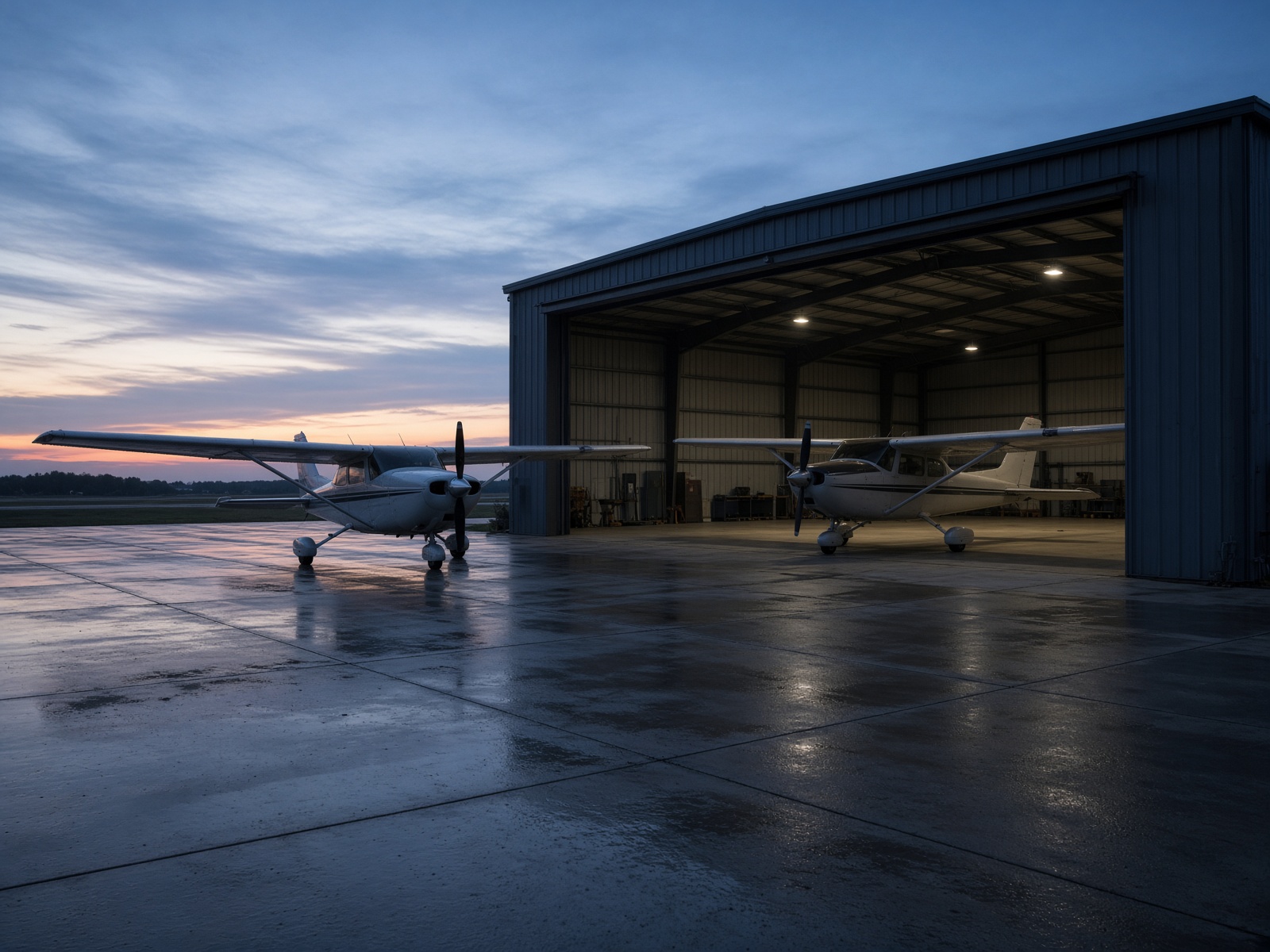
If you are asking how to become a pilot in India, the commercial licence is the target, and the DGCA CPL is the Indian version of it. This is a student briefing on the order of the steps, what DGCA itself publishes for each one, and what to check before you pay a school. It gives no fee quotes and no school rankings.
Independent study information. Rules change. Check every point against the current DGCA documents linked from the site before you rely on it.
What a DGCA CPL is
The Directorate General of Civil Aviation (DGCA) grants Indian flight crew licences under the Aircraft Rules, 1937. The requirements for each licence sit in Schedule II of those rules. The Commercial Pilot's Licence (Aeroplanes) is Section J.
A DGCA CPL is a real commercial licence. It is not an airline seat. For how it sits next to the PPL and ATPL, read PPL vs CPL vs ATPL explained. For what happens if you later want a Gulf licence, read Pilot training in Pakistan, India and the Gulf and the conversions page.
The steps, in order
- Get a DGCA computer number.
- Make sure your 10+2 is acceptable.
- Pass a Class 1 medical.
- Choose a flying school on DGCA's list.
- Pass the written papers.
- Complete the flying hours and the skill test.
- Apply for the licence on eGCA.
Steps 3 and 4 can overlap, but do the medical first. A school deposit is hard to get back. A failed medical is cheaper to find out about early.
Step 1 and 2: computer number and education
Every candidate for a DGCA licence exam needs a computer number from the DGCA examination portal, pariksha.dgca.gov.in. DGCA's FAQ says the minimum age to register is 16, there is no maximum age, and the number is valid for life.
For a CPL you must have passed 10+2 with Physics and Mathematics from a recognised board or university, or an equivalent exam. DGCA's user manual says you must be declared passed in both subjects. A pass with a fail in Physics or Mathematics is not accepted. (A PPL needs only the 10th standard, which is one reason the two licences are not interchangeable.)
If you are not an Indian citizen, DGCA's FAQ says you need a valid passport and an Indian mobile number to register, and you go through a security clearance.
Step 3: the Class 1 medical
DGCA's medical CAR (Section 7, Series C, Part I) says a Class 1 medical assessment is required for a CPL. The standards follow ICAO Annex 1 and DGCA's medical AICs.
The same CAR lists where the first Class 1 is done: the Air Force Central Medical Establishment in New Delhi, the Institute of Aerospace Medicine in Bangalore, MEC (East) in Jorhat, or a DGCA-empanelled aeromedical evaluation centre. You book the appointment through the eGCA medical module. The Class 2 medical is not required first.
Validity: one year up to age 60, six months after that. For single-crew operations it is six months above age 40.
Read the Class 1 medical guide and the medical page before any deposit.
Step 4: choose a flying school
Training must follow the flying training syllabus prescribed by the DGCA. Schools that can run it are DGCA-approved Flying Training Organisations. DGCA publishes a ranking of FTOs on its website. A logo on a Facebook page is not an approval. Check the school on dgca.gov.in, then use how to choose a flight school and the schools directory.
For the money, use the cost calculator on the costs page. Do not rely on a counsellor's quote, and add the type rating if no airline is paying for it.
Step 5: the written papers
DGCA's examination CAR (Section 7, Series B, Part I) lists the CPL theory subjects: Air Navigation, Aviation Meteorology, Air Regulation, and the aircraft and engine / instruments papers (general and specific), plus Performance where it applies. Performance applies to aeroplanes above 5,700 kg maximum take-off mass. The syllabus for the CPL papers is in CAR Section 7, Series B, Part IV.
Points that catch students:
- The pass mark is 70% in each subject. It is per subject, not an average.
- Most papers are multiple choice. Performance is not.
- If your Technical Specific paper is on an aeroplane above 5,700 kg, DGCA's portal asks for a certificate of ground training on that type from a DGCA-approved institute.
- For a CPL, the written results stay valid for five years before you apply for the licence.
You also need the Signals (practical) examination and a current Flight Radio Telephone Operator's Licence, both named in Section J. Ask your school how it handles them.
Step 6: flying hours and skill test
The Aircraft Rules, Schedule II, Section J, ask for a minimum age of 18 on the date of application, and flying training to the DGCA syllabus. On experience, as pilot of an aeroplane on the date of application you need at least 200 hours of flight time, including:
- 100 hours as pilot in command, with at least 15 of them in the six months before you apply
- 20 hours of cross-country as pilot in command, including one flight of at least 300 nautical miles with full-stop landings at two different aerodromes
- 10 hours of instrument time, no more than 5 of them on an approved simulator
- 5 hours of night flight, including 10 take-offs and 10 landings as pilot in command, in the six months before you apply
Within six months of applying you must also pass the skill test: a general flying test by day, one by night, a day cross-country of at least 250 nautical miles and a night cross-country of at least 120 nautical miles.
The rules also require English: Schedule II says CPL applicants must be able to speak and understand English for radiotelephony to the level DGCA specifies. Check that level with DGCA, then read ICAO English for airline pilots.
Step 7: apply on eGCA
DGCA licence applications go through its eGCA portal. Keep your logbook clean and your hours in the categories above. Unclear PIC or cross-country entries are the usual reason an application stalls.
CPL vs PPL in India
- Medical: a CPL needs Class 1. A PPL needs Class 2, unless you want instrument privileges, in which case Class 1.
- Education: a CPL needs 10+2 with Physics and Mathematics. A PPL needs the 10th standard.
- Exams: the PPL theory is a composite paper plus aircraft and engine papers. The CPL has the separate subject papers above.
- Hours and age: a CPL needs 18 years and 200 hours as set out above.
If you already know you want to fly for a living, do the Class 1 medical first, then train with the CPL in mind.
What this guide does not do
It does not promise an airline job, rank schools or quote fees. Use the costs page for ranges, and check the regulator for anything that matters before you pay.
FAQ
How many hours do I need for a DGCA CPL?
At least 200 hours as pilot of an aeroplane on the date of application, with the PIC, cross-country, instrument and night minimums listed above (Aircraft Rules, Schedule II, Section J).
Do I need a Class 1 medical before I start training?
DGCA requires Class 1 for a CPL. It is sensible to take it before paying a school. See the Class 1 medical guide.
What is the pass mark for the DGCA CPL papers?
70% in each subject (DGCA CAR Section 7, Series B, Part I).
Can I do a CPL without Physics and Mathematics in 10+2?
DGCA's user manual says you must be declared passed in both. Contact DGCA if you hold a different qualification.
Can a DGCA CPL be converted to a Gulf licence later?
Possibly, with extra requirements. See the conversions page and the regional briefing, and confirm with the other authority before you start.
Independent student briefing. Verify medicals, fees and approvals with the school and DGCA.
More from the blog
Regions
Pilot Training for Students in Pakistan, India, and the Gulf
PCAA versus DGCA versus GCAA versus CAA Oman: conversion, Gulf cadet nationality, English, full costs, and why waiting on a cadet call stalls careers.
Medical
Class 1 Medical for Pilots: What They Check
Class 1 medical for pilots: vision, hearing, ECG, blood, mental health, validity, deferrals, exam cost, and why you must sit it before a school deposit.
Licences
PPL vs CPL vs ATPL: The Licence Ladder Explained
PPL vs CPL vs ATPL explained: frozen ATPL, IR, multi-engine class, MCC, FAA versus EASA, conversions between authorities, and what airlines actually hire on.