ICAO English for Airline Pilots — Level 4 Is Not the Interview
ICAO Level 4 is the legal floor. Airlines interview at 5–6. What they score, why Level 6 does not expire, and how to train without the school brochure.
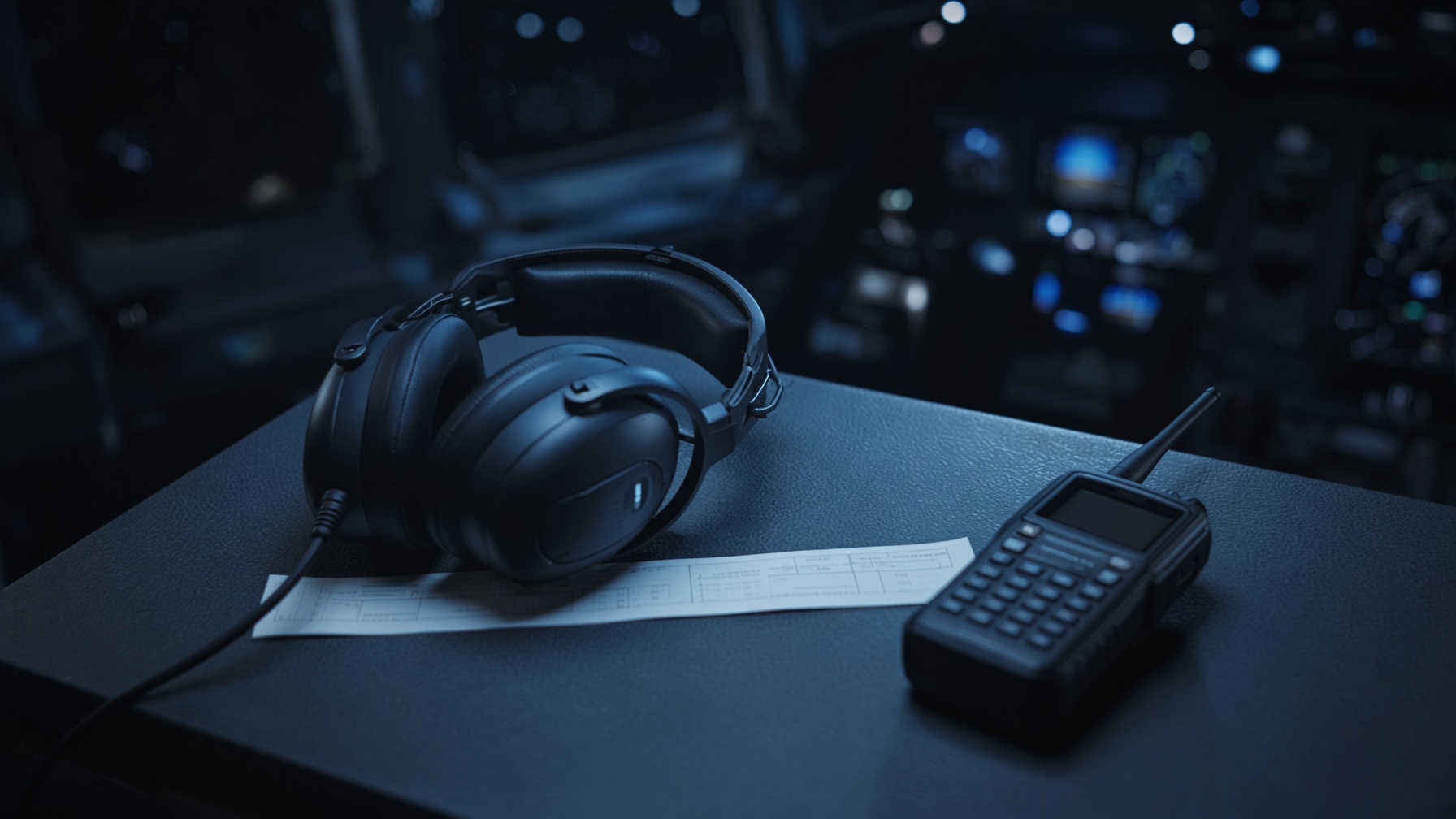
ICAO English Level 4 is the international minimum that lets a licensing authority write a professional licence. It is not the language of a cadet board, a Gulf simulator assessment, or a first-officer interview. Those rooms are not testing whether you can read a clearance. They are testing whether they would spend a twelve-hour duty with you in English when something breaks.
Students confuse the two tests because both use the word English. One is a legal stamp with six scored skills. The other is a conversation about a stall, a mistake, and a night stop, scored by people who have no obligation to hire you. Level 4 can expire. Level 6 does not. Interviews in the Gulf and at most cadet schemes run at 5 and 6 whether the notice says so or not. Train by recording briefings, listening to live ATC, and practising the interview out loud. The career map is the rest of selection. Living corrections sit on the founder’s Facebook page.
Level 4 is legal. The interview is not a legal test
Annex 1 set a language proficiency requirement so crews and controllers share a working language. Level 4 — Operational — is the floor for international radiotelephony. Below that, many authorities will not issue or validate the licence you want. Pass it on purpose, with an examiner who is actually approved, not with a certificate of uncertain origin.
An airline interview is a hiring decision. They may ask you to describe a diversion, to challenge a captain, to do mental maths, to tell a story. They will not stop you at “the legal minimum”. They will stop you when they cannot follow you, or when you cannot follow them. A Level 4 speaker often needs time and repeats. A board is not trained to wait.
Treat ELP and selection as two lines on the checklist. Pass the legal test so the licence exists. Then train past it so a human being would put you on a roster. The interview question bank is the syllabus for the second line.
What they actually score
ICAO Doc 9835 describes six skills. Examiners rate each from 1 to 6. Your overall level is the lowest of the six. That single rule surprises students who are fluent and sloppy, or precise and slow.
- Pronunciation — not an accent test. Can a controller understand you the first time, including numbers and callsigns.
- Structure – grammar and sentence patterns under load. Past, future, conditionals, and the difference between “we will” and “we would”.
- Vocabulary — aviation words plus the ordinary words you need when the QRH does not have a sentence for this exact mess.
- Fluency — pauses that are thinking, not translating. Filling every gap with “basically” is not fluency.
- Comprehension — ATIS, a fast controller, an unexpected question. Asking for a repeat is allowed; needing every sentence twice is not.
- Interactions — you start, you repair a misunderstanding, you close the loop. A monologue is not a radio.
A candidate with Level 6 vocabulary and Level 4 structure is Level 4. The certificate will say 4. Train the weak skill. Do not collect more phrases for the strong one.
Four, five, and six are not the same licence
Level 4 means you can operate with unexpected complications if you have time and if the other speaker cooperates. You may search for a word. You may restart a sentence. On a quiet VFR flight that can be enough. In a busy TMA, or in a CRM discussion, it sounds like work for everyone else.
Level 5 — Extended — is closer to what a first officer needs. You handle complications with little strain. You paraphrase. Occasional errors do not hide the meaning. Level 6 — Expert — is not “native speaker” as a passport. ICAO is clear that a native speaker can sit below 6 if they mumble or cannot simplify. Level 6 means you are easy to work with in English when the day is ugly.
Cadet and Gulf boards listen for 5 and 6 even when they never say the number. They listen for whether you can brief a take-off, answer “why”, and tell a story without the room helping you. If your ELP is 4, you can still apply. Do not be surprised if language, not flying hours, is why the email is a no.
Level 4 expires. Level 6 does not
Operational Level 4 is retested on an interval — commonly every three years. Level 5 is commonly six years. Level 6 does not expire. Your authority prints the date on the licence. Diary it like a medical. Students lose slots because the ELP lapsed during ground school, during a visa wait, or during the week of a type-rating start.
Level 4 is a renewable rating. Level 6 is a closed item. Interviews pretend you already closed it.
If you are sitting 4, plan the retest before you need a clean extract for an application. If you can honestly train to 5 or 6, that is fewer admin events over a career, and a better signal in a CV stack. Do not buy a “guaranteed Level 6” course from a shop that cannot show examiner credentials. A false 6 is a problem the first time a recruiter hears you speak.
Gulf and cadet rooms run at five and six
Flag carriers and academies in the Gulf work in English. So do European cadet schemes, even when the country has another language on the ground. Group exercises, SIM briefs, HR interviews, and technical orals all happen at conversational speed. They will not slow down to the pace of a Level 4 exam, where the examiner is trained to wait.
Nationality still gates many cadet seats. Language gates the rest. A student who trained locally and then converts — a common path in pilot training in Pakistan, India, and the Gulf — often meets English as the surprise exam. The flying was adequate. The briefing was not. That is a speech problem you can train.
If you are targeting that room, practise in the register they use: short sentences, numbers first, a clear “I do not know” instead of a wandering paragraph. The career page and the fit check exist so you look at height, age, medical, and language together, not after the application fee is gone.
How to train without a language-school brochure
You do not need a six-week residential product to move from a weak 4 toward a solid 5. You need daily speech, daily listening, and someone who will tell you when a sentence failed. A teacher helps. A cheap teacher who only chats about holidays does not. Aviation English is not general English with a jet in the background.
Set a duty-style week. Five days of thirty to forty minutes, not one panicked Sunday. Each session has a product: a recorded briefing, a comprehension note from live ATC, or a spoken answer to one interview question. If ATPL papers are also running, do not steal the English slot for another bank sitting. The ATPL note already warned you not to sit papers in a language you cannot yet think in.
Record the briefing. Then listen to it
Every day, brief something as if a first officer were sitting next to you. A weather picture. A take-off from your home field. A go-around. A MEL item. Three minutes. Phone on the table. Then listen without looking at notes. Count the restarts, the “um”, the numbers you swallowed, the sentence that never ended.
That recording is the cheapest examiner you will ever hire. It does not like you. It does not nod. Students who only practise in their head are fluent in their head. The board is not inside your head. If you cannot hear your own radio, you will not hear it in the SIM either.
Once a week, brief to a person — instructor, classmate, or anyone allowed to say “I did not understand”. Repair it. That repair is the Interactions skill. ICAO scores it. Airlines live on it.
Live ATC is cheaper than another course
Put on live ATC from a busy field you might actually use: Dubai, Doha, London, Delhi, a US Class B. Twenty minutes. Write what you heard: clearance, restriction, a readback that was corrected. Then say the readback yourself. You are training comprehension and pronunciation of numbers, not collecting airports.
Podcasts and films in English help general fluency. They do not replace ATC, because films do not contain “hold short”, “unable”, and a controller who does not care that you are tired. Official language material is linked from resources; ICAO’s own pages sit there so this article does not pretend to be Doc 9835.
If you miss three items in twenty minutes, that is data. Slow the playback. Repeat the same session tomorrow. Improvement is fewer misses, not a new app.
Practise the interview out loud
Paper answers produce paper confidence. Stand up. Answer “tell us about a mistake” in two minutes, recorded. Answer “why this airline” without reading. Answer a technical “what is a stall” as a picture, not a memorised paragraph. Then listen. Then do it again. The question list is on airline interview questions. Use it as a speaking syllabus.
On the day, if you do not understand the question, say so once, clearly, and ask for it again. That is operational. Inventing an answer to a question you did not hear is how CRM fails. If you need a word, paraphrase. Do not freeze. Examiners and captains both prefer a simple true sentence to a decorated false one.
Language will not replace a Class 1, hours, or a licence the airline recognises. It will decide whether they can use the rest of your file. Train it like a rating. Retest Level 4 before it expires. Aim the daily work at 5 and 6. For the current rumour mill — a new intake, a changed English vendor — use the founder’s Facebook page. For the standing map, stay on this site.
Questions students actually ask
- Is ICAO Level 4 enough to get an airline job?
- It is enough to hold many licences. It is not enough for most cadet and Gulf interviews. Those rooms run at Level 5 and 6: you brief, you argue a go-around, you tell a story, at conversational speed. Read airline interview questions with a recorder running. If you cannot do that out loud, the ELP stamp will not save the board.
- Does Level 4 expire?
- Yes. Level 4 is typically retested every three years, Level 5 every six, and Level 6 does not expire. Confirm the interval with your licensing authority — they copy ICAO with local paperwork. Do not let an ELP lapse during a type rating or a visa window. Expiry is a grounded week you did not budget.
- What do examiners actually score?
- Six skills, each 1–6: pronunciation, structure, vocabulary, fluency, comprehension, and interactions. Your overall level is the lowest of those six, not the average. Excellent vocabulary with broken structure is a 4, not a 5. That is why a memorised phrase book fails: one skill is a ceiling and the others are the floor.
- I passed ATPL theory in English. Does that cover ELP?
- No. Reading a stem is not the same as talking to a captain and a controller at once. ATPL success means you can decode long sentences. Interviews and line flying need speech, repair, and listening under noise. Keep theory and English as two gates. The ATPL method is a reading plan. This note is a speaking plan.
- How should a student in South Asia or the Gulf practise without a fancy school?
- Record a briefing every day. Listen to live ATC for twenty minutes. Practise the interview out loud, not on paper. Regional traps — converting a local CPL, cadet nationality gates, English as a second working language — are in pilot training in Pakistan, India, and the Gulf. Current intake rumours still belong on the founder’s Facebook page.
Continue on Class 1 Pilot
More from the blog

Selection
Airline Pilot Interview Questions (With What They Want)
Airline pilot interview questions for 2026: motivation, technical, CRM and STAR stories, CV gaps, and the questions you should ask the board.

Regions
Pilot Training for Students in Pakistan, India, and the Gulf
PCAA versus DGCA versus GCAA versus CAA Oman: conversion, Gulf cadet nationality, English, full costs, and why waiting on a cadet call stalls careers.

Licences
How to Pass ATPL Theory Exams Without Burning Out
EASA ATPL theory is fourteen papers; FAA writtens are fewer. One bank, a 90 percent gate, clustered sittings, and books for the pictures — not burnout.