Before the first solo
Density altitude and crosswind. If the DA is high and the strip is short, the lesson is a briefing, not a takeoff.
Flight computer
Density altitude, TAS, wind, fuel, and the 1-in-60 rule — the same face of the metal computer, without hunting for the slide. Training aid only. Cross-check the AFM and a mechanical E6B before you fly.
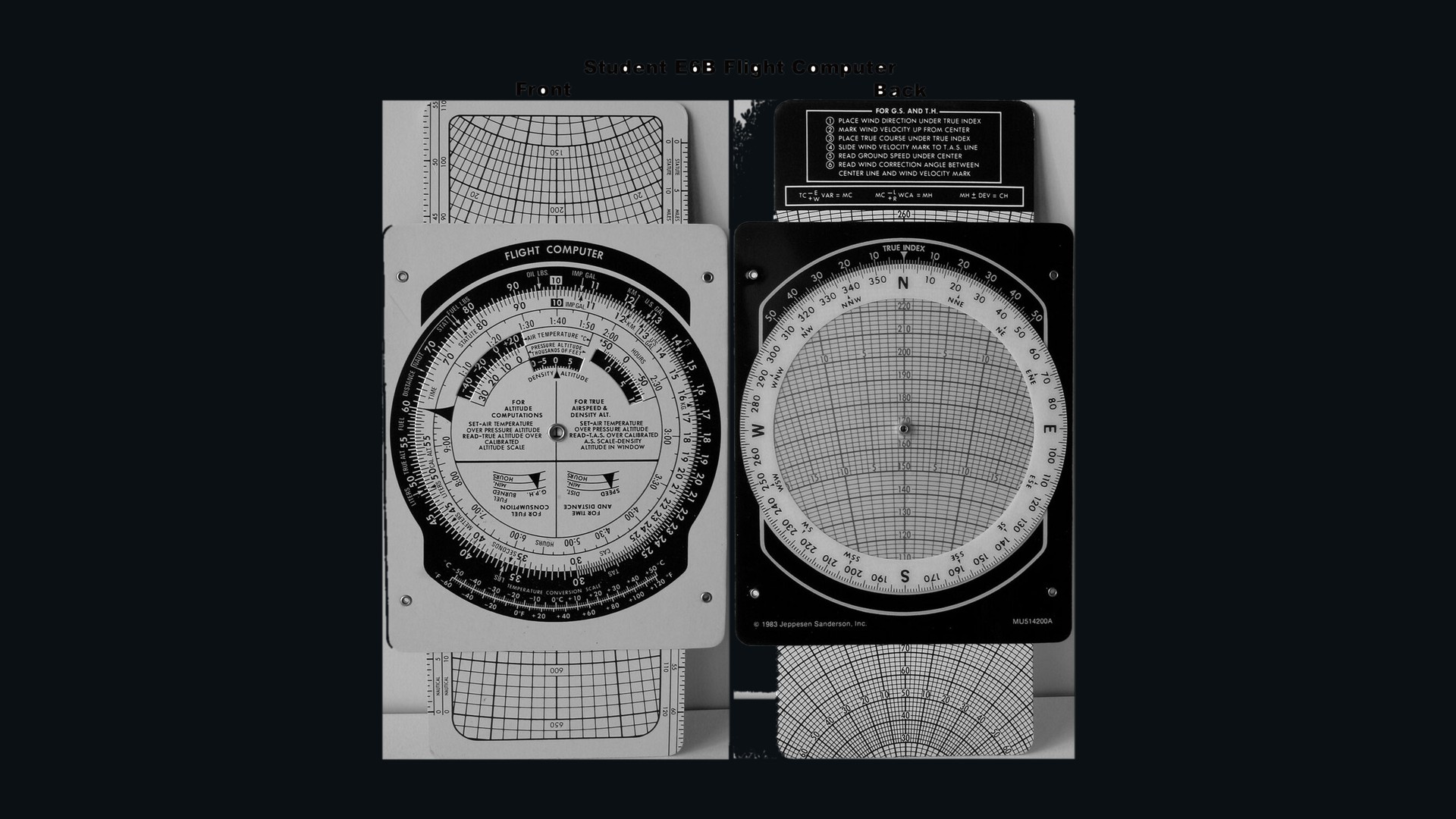
Photo: Dave Faige / Wikimedia Commons, CC BY-SA 3.0
Hot, high, and humid is how light trainers stop flying. Compute pressure altitude first, then density altitude from OAT. Use this before a summer takeoff from a short runway — then still check the AFM chart.
Pressure altitude
3,500 ft
Density altitude
5,984 ft
ISA temperature
8.1 °C
ISA deviation
+21.9 °C
Rule of thumb: DA rises ~120 ft per degree above ISA.
These numbers use ICAO standard atmosphere and the usual training-computer assumptions (no compressibility, 30 ft/hPa, 2.5 °C/1,000 ft for cloud base). They will not match a certified app to the last foot, and they must not replace the POH, a mass-and-balance, or ATC. Full terms are on the legal page.
Density altitude and crosswind. If the DA is high and the strip is short, the lesson is a briefing, not a takeoff.
Wind triangle, time/speed/distance, fuel. Update groundspeed from actual fixes, not the forecast wind you copied at 0700.
They still ask 1-in-60, TOD, and ‘what is density altitude?’ Know the why, not only the button.
Founder & content provider
Class 1 Pilot is founded by the aviation education Facebook page that publishes living guidance for aspiring commercial pilots. That page is the main content provider for this site.