How to Choose a Flight School — and the Red Flags
How to choose a flight school: ATO approval, aircraft on the line, instructor ratio and first-time pass rates. Visit the apron before any deposit.
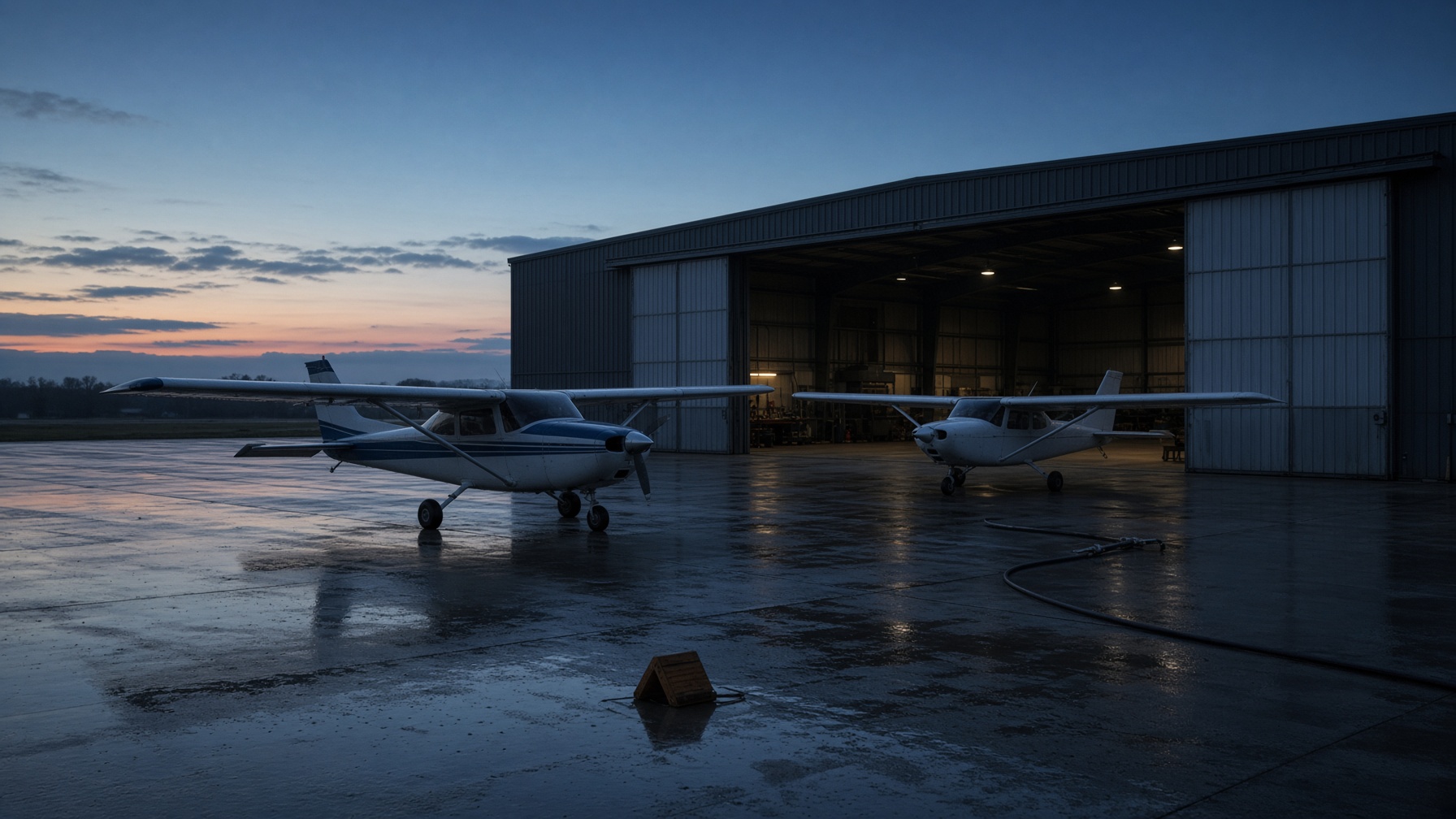
A flight school is not a vibe. It is an approved training organisation, a dispatchable fleet, a roster of instructors, and a skill-test record. Students lose a year when they buy the brochure: a rendered Cirrus, a lanyard with an airline logo, a counsellor who talks like a recruiter. The briefing is slower. You check the stamp, you count the aeroplanes, you ask for numbers in writing, and you walk the apron on a working day.
This note is the visit plan. Use it before you wire a deposit, whether you are looking at a PCAA club in Karachi, a DGCA school in India, a GCAA academy in the Emirates, or an EASA ATO in Europe. The schools directory lists known academies. The commercial training costs note prices the whole pipeline. Neither page replaces a walk on the line. For living questions after the visit, the founder’s Facebook page is where students still compare clubs in public.
Approval is not a brochure
The first document is the approval, not the prospectus. Every serious school sits on a regulator list. In Pakistan that is the Pakistan Civil Aviation Authority list of approved flying clubs and training organisations. In India it is DGCA. In the UAE it is GCAA. In Oman it is CAA Oman. In Europe it is an EASA ATO number. In the United States it is Part 141 or Part 61 under FAA. If the counsellor cannot show you the number, and you cannot find that number on the authority site, you are not looking at a school. You are looking at marketing.
Print the list yourself. Do not accept a screenshot of a certificate in a WhatsApp chat. Approvals lapse. Names change. A club that was current in 2022 may be restricted in 2026. Ask which courses are on the current approval — PPL only, CPL, instrument, multi-engine — because a school can be legal for private hours and not legal for the commercial syllabus you think you bought.
Count the aircraft on the line
Brochure fleets are a known trick. Twelve types on the website, two airframes that actually fly, one of them in 100-hour inspection. You are paying for dispatch, not for a hangar photograph. Go on a weekday morning. Stand on the apron. Count what has a current maintenance release and a booked slot. Ask which aircraft are grounded and why. An honest operations desk will tell you. A sales desk will change the subject to the new shipment that is always three weeks away.
Type mix matters. A school that trains CPL students on a single tired two-seat trainer will bottleneck the course the moment that airframe goes unserviceable. Multi-engine students need a twin that is actually available, not a type that lives at another base. Ask how many hours the fleet flew last month. Hours flown are the only honest capacity figure.
- How many aircraft are dispatchable today, not in the brochure?
- Which types are used for PPL, night, instrument, and multi-engine?
- What is the extra-hour rate when a machine is down and you wait?
- Who holds the maintenance approval, and where is the last release?
Instructor ratio and who actually teaches
A school can have twenty names on a staff board and three people who fly with students this month. Ask how many instructors are current, how many students they each carry, and who covers leave. A ratio that looks fine on paper fails when two instructors are on airline interviews. You will feel that as cancelled slots, rust between lessons, and extra hours you were not quoted.
You want a named chief flying instructor you can meet, a syllabus that is not only in the counsellor's head, and a written rule for what happens when your assigned instructor leaves mid-course. Unsupervised new instructors plus a packed student list is the combination that burns money.
First-time pass rates, in writing
Marketing says world-class. You want first-time pass rates for PPL, instrument rating, and CPL skill tests in the last twelve months, with the number of candidates attached. A school that cannot produce that is either too new to have a record or too careful to show you one. A high extra-hour bill after a failed test is how weak training is monetised.
Ask how many students started the CPL phase last year and how many hold the licence now. Ask whether the examiner is in-house or independent. If the school will only talk about airline placement instead of test results, you are still in the brochure.
Written hour quotes, not verbal ones
A verbal package is not a price. You need a written quote that splits ground school, dual, solo, night, instrument, multi-engine, exam fees, landing fees, and the extra-hour rate after the included package. Wet versus dry matters. Dual versus solo matters. Compare it with the costs page so you know whether you are looking at a regional band or a fantasy.
Ask what happens to unflown hours if you pause, fail a phase, or the medical lapses. Ask whether fuel surcharge sits inside the hour rate or on top. Pakistani and Indian students training abroad should add visa, TSA or security clearance, and housing as separate lines. If the school will not put the extra-hour rate on paper, assume it is the number that hurts.
Visit the apron before you wire money
A campus tour that stays in a meeting room is a sales meeting. You want dispatch, the briefing room during a normal wave, the maintenance hangar, and a look at how students move from ground school to the aeroplane. Ask a current student, not the counsellor, how many lessons they lost last month to weather, serviceability, or missing instructors.
If you cannot visit because you live in another city, send someone who understands aeroplanes, or delay the deposit until you can. Remote enrolment is how people buy a fleet that does not exist. For a sense of what the first hour actually contains, read what to expect on a first flying lesson before you treat a discovery flight as a career decision.
Housing, visas, and the months you are not flying
The course length on the website is the flying syllabus in good weather with a working fleet. Real elapsed time includes visa delay, medical scheduling, exam sittings, and aircraft downtime. Ask the school for a typical elapsed time from day one to CPL for the last two courses, not the published minimum. Then price housing against that slower number. The commercial training costs note is built for that full pipeline, not the first ten hours.
Visa and security are not paperwork you do after enrolment. US training needs a TSA security threat assessment. European schools need a student visa that matches the course length. Gulf academies have nationality and medical filters that sit in front of the invoice. Idle months are how a cheap hour rate becomes an expensive year.
Pay-to-fly and the phrase cadet guaranteed
Pay-to-fly is the arrangement where you pay for line hours, a type rating, or a jump seat, in exchange for a vague path to a job. Sometimes it is dressed as a cadet programme. Sometimes it uses an airline logo the operator did not license. Read the cadets page. A real cadet or mentored scheme names the operator, the bond, the nationality rule, and the selection. A shop that sells cadet guaranteed without a named contract is selling hope.
A guaranteed airline job written into a brochure but not into a named operator contract is not a job.
If a counsellor says the airline always takes their graduates, ask for the last twelve months of names and operators, in writing. Students from Pakistan, India, and the Gulf hear this pitch because the prize is a Gulf right-hand seat. The honest path is a recognised licence plus conversion, which is what pilot training in Pakistan, India, and the Gulf is for.
Pressure deposits
Pressure to pay the full course this week to hold a slot is a classic close. A school with a working fleet can wait while you check the PCAA or DGCA list, compare a second quote, and sit a Class 1. A school that cannot wait is telling you something about its cash flow. Do not pay the whole invoice to secure a start date you have not verified with operations.
A holding deposit against a written quote, refundable if the Class 1 fails or the approval is not on the list, is a different instrument. Read the refund clause twice. If there is no refund when the medical fails, you have prepaid a course you may not be allowed to fly. Take the quote home. Sleep. Check the list. Then decide.
Pakistan clubs as a worked example
Karachi Aero Club, Rawalpindi Flying Club, and Askari Flying Academy are names students in Pakistan already know. Treat them the way you would treat a Gulf academy: as examples of a check, not as endorsements. Karachi Aero Club is a historic PCAA club with an integrated CPL and instrument path; dedicated students quote nine to twelve months, and the authority allows two years. Rawalpindi Flying Club is a northern option that advertises new courses through the year. Askari advertises PPL through CPL on a Cessna fleet. For each, the work is the same. Confirm the live PCAA approval. Visit the apron. Count aircraft and instructors. Ask for first-time pass rates and a written extra-hour rate.
A Pakistani CPL is a real licence. It is also the start of a conversion if your target is GCAA or EASA, which is why the hour quality and the logbook matter as much as the rupee rate. Cheap hours in an unapproved shop are hours you may buy twice. That is the whole point of this briefing: the stamp, the fleet, the instructors, the pass rates, the written quote, the visit, and a flat refusal of pay-to-fly and cadet guaranteed. Take the notes to the founder’s Facebook page and compare them with students who have already walked those aprons, then use the schools directory only as the list of doors you still have to open in person.
Questions students actually ask
- Is a school on Instagram enough proof that it is approved?
- No. Approval lives on a regulator list: PCAA, DGCA, GCAA, CAA Oman, EASA, FAA. Ask for the ATO or flying-club number and find it yourself. The schools directory is a map of known names, not a substitute for that check.
- How many aircraft should I see on a visit?
- Enough dispatchable machines for the students already enrolled, plus a spare when one is in maintenance. A brochure with twelve types and two tired airframes on the line is data. Count what can fly this week, not what is painted on the hangar wall.
- Should I pay a deposit the same day as a trial lesson?
- No. A same-day deposit after a first flying lesson is a sales close, not a training plan. Take the notes home, check approval, and compare a written hour quote with at least one other school.
- What does cadet guaranteed actually mean?
- Usually nothing you can enforce. A cadet seat is an airline decision. Read cadet programmes and pilot training in Pakistan, India, and the Gulf before you treat a school's promise as a job. If there is no named operator contract, there is no guarantee.
- Where do I take the written quote after I visit?
- Compare it with a second school, then ask current students about extra-hour rates and conversion. A counsellor who earns commission on your enrolment is not a second opinion.
Continue on Class 1 Pilot
More from the blog

Costs
How Much Does Commercial Pilot Training Cost in 2026?
Commercial pilot training cost in 2026 across the US, Europe, Gulf and South Asia, with extras, bonds, written quotes, and type ratings you should not buy.
Path
What to Expect on Your First Flying Lesson
What to expect on a first flying lesson or discovery flight: briefing, walk-around, radio, weather delays, and same-day deposit red flags.

Regions
Pilot Training for Students in Pakistan, India, and the Gulf
PCAA versus DGCA versus GCAA versus CAA Oman: conversion, Gulf cadet nationality, English, full costs, and why waiting on a cadet call stalls careers.